Spinach/Palak is a tasty Green with high nutritional value. Spinach can either be eaten Raw or cooked and hence used in many cuisines. In India, Spinach is used to prepare many tasty dishes like Palak paneer, Palak soup, Palak paratha etc.
For Palak veg soup recipe, click on the pic

The famous cartoon character Papeye the saylor is shown eating spinach to gain strength instantly. Indeed it is true, as Spinach is a rich source of Vitamin A, Vitamin c, Vitamin K, Manganese, Magnesium, Folate and Iron <Source wiki>
A list goes on and on if you see the health benefits of Spinach. It helps in Diabetes management, Cancer prevention, Asthma prevention, Lowering blood pressure, Bone health, Prevents constipation, last but not least it helps to enhance our beauty by promoting healthy skin and Hair.
Can any Indian cuisine be without Pigeon pea? Not at all, Piegon pea is used not only in Indian cuisine but also in other cuisines as well.
Millets may look small but includes immerse health benefits. They are one of the oldest foods know to us. They has short growing season and grows well in dry regions too.
Proso millet is one among the millet varieties which is garbing its popularity for its health benefits and gluten free nature.
Indian names of Proso millet are Barri (Hindi), Panivaragu (Tamil), Varigulu (Telugu), Baragu (kannada)
Nutritional value of Proso millet : Protein 12.5 (g), , Minerals 1.9 (g), Fibre 2.2 (g), Iron 0.8 (mg), Calcium 14 (mg) source wiki
Little millet is smaller in size comparing to other millets and has a dull colour.
Indian names of Little millet are Samai (Tamil), Kutki (Hindi), Sama (Telugu), Same (Kannada), Chama (Malayalam)
This little millet has the ability to grow well even in adverse climatic conditions. Little Millet is best suited for Diabetic patients, helps in reducing fat, helps in relieving constipation, helps to cure stomach related problems and good for bones and mucles.
Little millet is rich in fibre and protein.
Nutritional value: Protein :7.7 (g), Fiber : 7.6 (g), Minerals :1.5 (g), Iron : 9.3 (mg), Calcium :17 (mg)
We can prepare variety of tasty dishes with Samai, like Samai uthappam, Millet masala Dosa, Samai rava upma.
Barnyard Millet are tiny white coloured grain which has loads of health benefits. This Barnyard millet is the fastest growing millet.
Barnyard millet is rich in Calcium, Protein, Phosphorus, Fibre and Iron. So it is best suited to control Diabetes, Heart related problems and Anaemic. Also it works as antioxidant and improves body metabolism.
The other Indian names of this Barnyard millet is Jhangora (Hindi), Odalu (Telugu), Kuthiraivali (Tamil), OOdalu (Kannada).
If you see the nutrient content in Barnyard millet-- 11.2 (g) Protien, 10.1 (g) Fiber, 4.4 (g) Minerals, 15.2 (mg) Iron, 11 (mg) Calcium.
Many healthy recipes can be prepared using this Barnyard millet and it works as better alternative for polished white Rice. Barnyard millet can be cooked as rice, as pongal, upma, idiyappam, etc. The recipe which I tried is Adai, click here to get the recipe.
Omavalli leaves/ Karpooravalli/Doddapatre soppu/Sambrani soppu/Mexican mint is a commonly used leaves as a home remedy for cold and cough. These thick oval shape leaves has strong flavour and this plant is grown in a small pot in our home garden.
Whenever I have cold I will pluck two leaves and wash and chew them for immediate relief. You can boil these leaves with tulsi leaves and have it as kashayam. Inhaling vapour of water boiled with karpooravalli leaves helps to relieve nose congestion.
I got a kashayam recipe for my kid and give this kashayam on the day of head-bath to prevent him from cold. 2 Omavalli leaves, 1 pod Garlic and 1 betel leaf (remove the middle stalk). Crush the above ingredients and boil it in 1/4 cup of water. After straining the kashayam is ready.
I have also seen chutney, rasams, and bajjis made out of these leaves.
Kohl Rabi/Knol-khol/Nool kol (Tamil) also called as German Turnip is packed with loads of nutritional value and has less fat content. As you can see the picture above, it is greenish white coloured vegetable.It is used to prepare variety of dishes in Indian cuisine.
I have tried parathas with this veggie and came out so well, click on the pic to get the recipe.
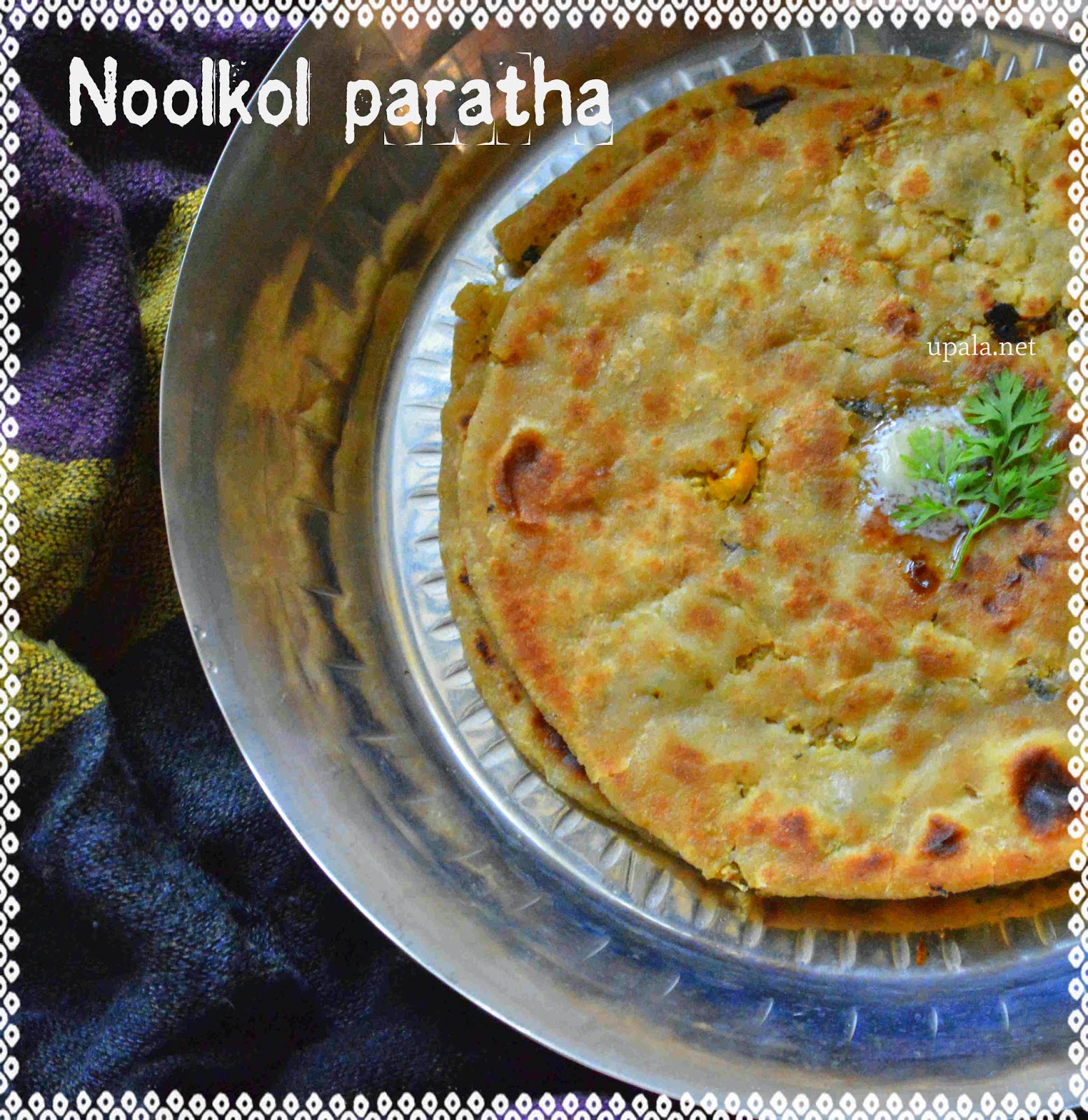
Always select the tender ones to get tasty and healthy dishes.
Its nutritional value are
Rich in anti oxidant
Low in saturated fat and cholesterol also high in fibre
Contains B-complex groups
C rich veggie
Rich in beta carotene
Health Benefits are
Fights cancer
Clears digestion problem
Increases immunity
Stabilizes blood pressure
weight watchers friend


